Stamped Concrete Patios in Kansas City: Cost, Patterns & Contractors
Everything you need to know about stamped concrete patio cost kansas cityfrom Kansas City's trusted concrete experts.
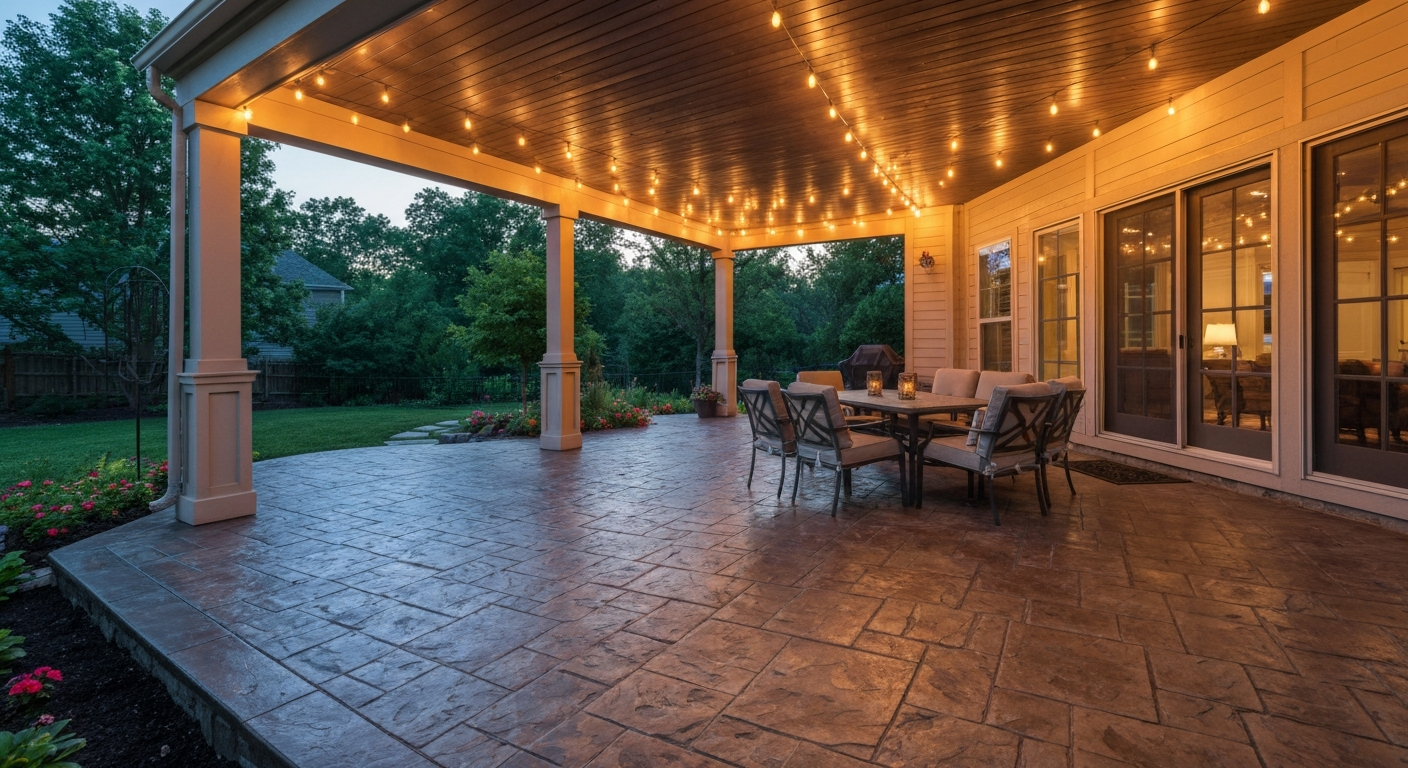
Stamped concrete is the most popular decorative upgrade for Kansas City patios — and for good reason. It delivers the visual impact of natural stone, brick, or travertine at roughly half the installed cost, with far less long-term maintenance. In a metro where outdoor living spaces drive real estate appeal in neighborhoods from Leawood to Lee's Summit, a stamped concrete patio can meaningfully move a home's perceived value. This guide covers what stamped concrete actually costs in Kansas City in 2026, which patterns and colors work best in our climate, how it compares to alternatives, and what to look for when hiring a stamped concrete specialist.
Popular Stamped Patterns in the Kansas City Market
The most requested patterns in the KC metro: Ashlar slate is the top seller — a large-format rectangular stone pattern that reads as sophisticated without being busy. It pairs well with the traditional architecture common in Leawood, Prairie Village, and Brookside. Herringbone brick is the second most common request, particularly in Midtown and older Northland neighborhoods where brick homes are prevalent. Flagstone (random or uniform) gives a more organic, natural feel and is popular for entertainment patios where homeowners want a garden-adjacent look. Travertine is the premium residential choice for luxury projects — the light, warm tones and large-format squares suit the newer Leawood and Overland Park developments particularly well. European fan (cobblestone) is a detailed, traditional pattern that works best on smaller accent areas or borders rather than full patio fields.
Color Options: Integral vs. Color Hardener
Stamped concrete achieves its color through two distinct processes, often combined. Integral color is mixed into the concrete batch before it's poured — the pigment runs through the entire slab depth, so chips and wear don't reveal plain gray concrete underneath. Color hardener is broadcast onto the surface before stamping — it intensifies surface color and provides the color for the raised portions of the stamp pattern. Using both together allows for multi-tone finishes that mimic the natural variation of real stone. Antiquing release powder settles into the recessed grout lines, creating contrast and depth. The combination of a warm buff integral with a charcoal antiquing release is probably the single most popular stamped concrete color scheme in the Kansas City metro.
Cost Breakdown: What Stamped Concrete Costs in Kansas City
Stamped concrete in Kansas City runs $14–$22 per square foot installed for most residential patio projects. The range is driven by pattern complexity, number of colors, and site conditions. Budget benchmarks for 2026: a 200 sq ft stamped patio runs $2,800–$4,400; a 300 sq ft patio costs $4,200–$6,600; a 400 sq ft patio runs $5,600–$8,800. Complex designs with custom borders, inlaid medallions, or multiple stamp patterns can push past $25/sq ft for premium work. Always get a written scope that specifies the stamp pattern, color system, concrete PSI, and slab thickness.
Stamped Concrete vs. Alternatives
The two most common alternatives homeowners consider are natural stone and concrete pavers. Natural stone (flagstone, bluestone, travertine) costs $20–$40 per square foot installed in Kansas City — roughly double to triple stamped concrete for comparable visual results. Concrete pavers run $15–$30 per square foot installed and offer flexibility (individual pavers can be replaced) but perform poorly on KC's clay soil — active clay causes settling and shifting, and weeds grow aggressively in the joints over time. Stamped concrete is monolithic (no joints for weeds, no individual pieces to shift) and significantly less expensive than natural stone, making it the right choice for most Kansas City homeowners who want a premium decorative surface without premium material costs.
Maintenance: Resealing for Kansas City Winters
Stamped concrete requires more maintenance attention than plain concrete, but the work is straightforward. The sealer is what holds and protects the surface color — once it degrades, UV exposure and freeze-thaw moisture attack the color hardener layer. In Kansas City's climate, plan to reseal your stamped concrete every 2–3 years. Signs that resealing is due: the surface has lost its sheen, water no longer beads, or the color looks faded. Professional resealing runs $150–$400 for a standard patio depending on size. Avoid using chloride-based de-icers (rock salt, calcium chloride) on stamped concrete — they break down the sealer and attack the surface. Use sand or a concrete-safe product during KC winters.
What to Look For in a Stamped Concrete Specialist
Stamped concrete is significantly more skill-dependent than plain flatwork. Timing is everything: the stamps must be pressed during a specific window after the pour when the concrete is firm enough to hold a pattern but not yet set. Ask to see a local portfolio of completed stamped patio projects in the Kansas City area. Ask specifically how many stamped projects the crew installs per year. Verify that the same crew does the pour and stamping — stamped work should not be subcontracted to a crew that doesn't know the project specs. KC Concrete Guide connects you with stamped concrete specialists who have proven local project histories — submit a quote request and we'll match you with the right contractor.
The Most Popular Stamped Concrete Patterns in Kansas City
KC homeowners have strong pattern preferences shaped by the area's architectural styles — a mix of traditional brick colonials in Johnson County, ranch homes in the Northland, and craftsman bungalows in older neighborhoods. The most commonly requested patterns: Ashlar Slate is the top choice — a random rectangular stone pattern that looks like natural stone but holds up better in KC winters. It pairs well with virtually any home style. Herringbone Brick is the second most popular, especially in established neighborhoods like Mission Hills, Brookside, and older Overland Park subdivisions where brick architecture is common. Random Stone (also called flagstone pattern) is popular for larger patios where the goal is a naturalistic, irregular look. European Fan, also called cobblestone fan, is a premium choice for curved patios and circular designs around fire pits. Travertine is the preferred pattern for pool decks — the texture prevents slipping and the look is high-end resort style. Your contractor should have a physical pattern book showing concrete samples, not just photos — seeing the actual texture and scale matters before you commit.
Color Options and What They Actually Look Like
Stamped concrete color is achieved two ways, often combined: Integral color is mixed directly into the concrete batch — it goes all the way through the slab, so chips and cracks don't expose gray concrete underneath. This is your base color. Color hardener is a dry-shake compound applied to the surface during finishing — it creates a more vibrant, denser color layer on top of the integral base. The combination of these two, plus an antiquing release agent applied before stamping, creates the multi-tonal look that makes stamped concrete look like real stone rather than tinted gray concrete. In KC, earth tones dominate: sandstone, slate gray, charcoal, terra cotta, and buff. Bright colors age poorly and tend to look dated quickly — the contractors in our network will tell you this upfront. Whatever color you choose, request a sample pour or at minimum a large color chip — colors look significantly different wet vs. sealed vs. weathered. The sealer you apply changes the apparent color by 20-30% as well.
Maintenance Reality: What Nobody Tells You Upfront
Stamped concrete requires more maintenance than plain concrete — specifically, resealing every 2-3 years in KC's climate. This isn't optional; it's what preserves the color and prevents surface scaling from freeze-thaw cycles. A quality residential sealer costs $150-$300 for a 400 sq ft patio and can be applied by a homeowner with a pump sprayer in about 2 hours. The tell that resealing is overdue: the surface loses its sheen and starts to look chalky or faded. Deferred resealing leads to color fade, surface pitting, and eventually the kind of deterioration that requires professional resurfacing. The other maintenance item: never use salt or calcium chloride ice melt on stamped concrete. It destroys the sealer and eventually spalls the surface. Use sand instead, or heated mats if ice is a persistent problem. With proper sealing, a stamped concrete patio in KC should look excellent for 20+ years. Without it, you'll be looking at resurfacing in 8-10 years.
Stamped Concrete vs. Pavers vs. Natural Stone: The Real Comparison
Homeowners in KC frequently compare these three options before deciding. Here's the honest breakdown: Stamped concrete runs $14-$22 per square foot installed. It's a monolithic slab — no weeds between joints, no shifting over time, and in KC's clay soil that matters because pavers notoriously shift and settle on expansive subgrades. Maintenance: reseal every 2-3 years. Repairability: difficult to match exactly if a section is damaged. Concrete pavers run $18-$35 per square foot. They look great and individual pavers can be replaced if damaged. But in KC, clay soil movement causes pavers to shift, heave, and require releveling every 5-10 years. Joints attract weeds. They're the right choice for some applications — but not the maintenance-free option their price tag might suggest. Natural stone (flagstone, bluestone, slate) runs $25-$50+ per square foot. It's the most beautiful option and ages gracefully. But it's expensive, requires skilled installation, and in KC winters the irregular surface holds ice. For most KC homeowners, stamped concrete hits the best balance of cost, durability, and appearance — which is why it's the most requested decorative upgrade in the market.
Finding the Right Stamped Concrete Specialist in KC
Not every concrete contractor does stamped work — and those who do vary significantly in skill level. Stamped concrete is less forgiving than plain concrete. Timing the stamp to the concrete's set, managing color application, and achieving consistent depth and pattern alignment takes practice. When evaluating contractors for stamped work: ask to see a physical portfolio of completed KC-area projects, not stock photos. Ask specifically how many stamped projects they completed in the last 12 months — stamped work requires active practice to maintain skill. Ask who on their crew does the stamping — some companies have one specialist who does all the detail work; if that person isn't on your job, quality varies. Ask about their sealer brand and reapplication schedule recommendation. KC Concrete Guide connects homeowners with contractors who specialize in decorative concrete and have demonstrated portfolios in the KC market. Submit a quote request and we'll match you with a vetted local specialist.
KC Concrete Guide Editorial Team
Expert guides on concrete services, costs, and contractor selection for Kansas City homeowners. Our team researches local market pricing, contractor standards, and regional considerations to help KC homeowners make informed decisions.
Related Articles
Stamped Concrete Patio Ideas for KC Homes
Popular patterns, color combinations, and design ideas that work for Kansas City's climate and architectural styles.
Read more Contractor GuideConcrete Patio Contractors in Kansas City
What to expect from the estimate process, drainage planning, and installation timeline for KC patio projects.
Read more Cost GuideConcrete Driveway Cost in Kansas City (2026)
What does a new concrete driveway actually cost in Kansas City? Price ranges by finish type, size, and site conditions.
Read moreReady to Start Your Project?
Get connected with vetted Kansas City concrete contractors today.
Get a Free Quote