Retaining Walls Across the Kansas City Metro (KS & MO)
Compare retaining walls across the Kansas City metro, in Kansas and Missouri. A wall holds a slope, limits erosion, and can make yard space usable. Drainage and reinforcement belong in the plan.
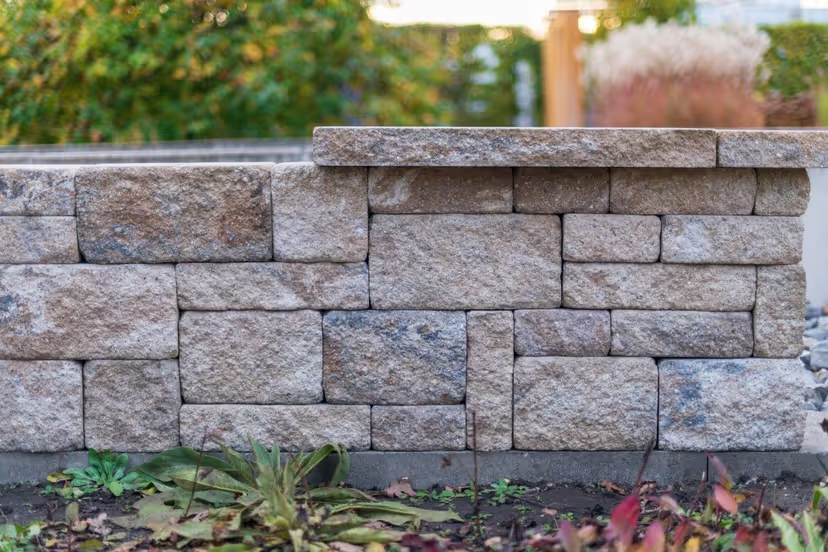
This page compares retaining walls across the Kansas City metro, in both Kansas and Missouri. For work inside Kansas City, Missouri, see retaining walls in Kansas City, Missouri. City pages also cover Overland Park, Olathe, Lenexa, Shawnee, Lee's Summit, Independence, and Blue Springs. Johnson County, Lee's Summit, and older neighborhoods on both sides of the state line sit on rolling ground. A wall holds soil, manages runoff, and can make a sloped lot usable for a patio, garden, driveway, or play area.
The three most common types are segmental retaining wall block (brands like Allan Block and Versa-Lok), poured concrete, and concrete masonry unit (CMU) block walls. Segmental block is the most common for residential projects under 4 feet — it's relatively affordable, has a natural look, and doesn't require forms or curing time. Poured concrete walls are stronger and better for taller or more heavily loaded applications. CMU block is common in commercial settings and for basement-level walls. For decorative applications, stamped or textured concrete walls can match your patio or home's exterior.
Here's what most homeowners don't know: in virtually every KC-area municipality — Overland Park, Olathe, Shawnee, Lee's Summit, Kansas City proper — retaining walls over 4 feet in height require a building permit and engineered drawings stamped by a licensed structural engineer. This isn't bureaucratic overhead; it's because a wall failure on a loaded slope is a serious safety and liability event. Ask your contractor to pull permits and involve an engineer on any wall that requires it. Don't hire someone who builds over 4 feet without permits.
Drainage is the single most important factor in retaining wall longevity. Most wall failures aren't a mystery of the block — they're drainage failures. Hydrostatic pressure from water saturating the soil behind a wall will eventually overwhelm any wall that doesn't have proper drainage. A proper wall includes a gravel drainage layer behind it, a perforated drain pipe at the footing, and weep holes at the base. If your existing wall is leaning, drainage failure is the most likely cause.
Typical Costs in KC
Retaining wall costs in Kansas City depend on wall height, material, and drainage requirements:
Free for homeowners · No obligation
What to Expect
What to Expect from Retaining Wall Contractors in Kansas City
Prevents soil erosion
Creates usable flat space
Manages water runoff
Multiple decorative options
Engineered for KC clay soil
Proper drainage built in
Typical Project
How a Local Contractor Usually Works
Site Survey
Evaluate slope, soil conditions, and drainage patterns.
Engineering
Design wall for structural integrity with proper reinforcement.
Excavation
Dig footing, install drainage aggregate and pipe.
Build Wall
Pour or stack wall with proper backfill and drainage layers.
Grade & Finish
Final grading, topsoil, and any decorative finishing.
Common Questions
Frequently Asked Questions
By city
Open the city page for the local scope. City hubs cover places that do not have their own service page yet.
Other Concrete Services in Kansas City
Contractors in our network work across the KC metro — including Overland Park, Olathe, Lee's Summit, Shawnee, Lenexa, Independence, and Kansas City. View all service areas →
Get a free quote
Share your name, phone, email, city, and project details. We'll connect you with a vetted local contractor. Free for homeowners.
Ready to Get Started? Get a Free Quote Today.
Request a free quote and we'll connect you with a vetted local contractor.